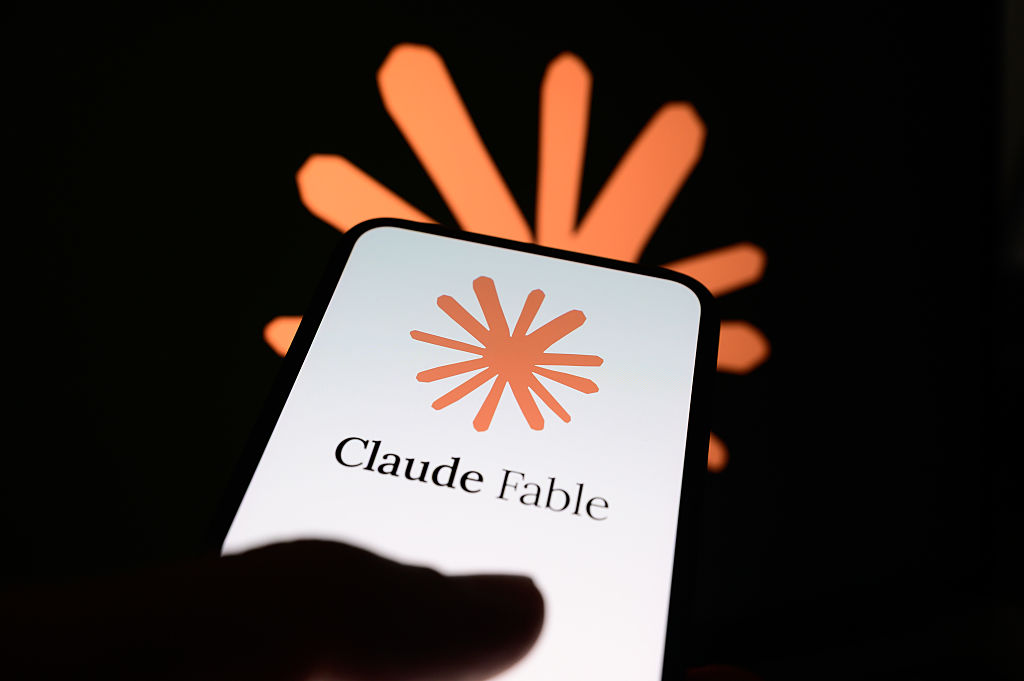
Anthropic disabled its two most powerful artificial intelligence models on Friday to comply with a United States government order blocking their use by any foreign national.
According to Anthropic, the Trump Administration cited national security concerns when it issued an export-control directive on Friday that called for suspending all access to its Fable 5 and Mythos 5 models by any foreign national, including Anthropic’s own employees.
Visit moryak.biz for more information.
The company said in a statement that it had to “abruptly disable” access to the models for all customers to comply with the order. Users reported being unable to access the models on Saturday.
“We apologize for this disruption to our customers. We believe this is a misunderstanding and are working to restore access as soon as possible,” the statement said.
Read more: The Most Disruptive Company in the World
The U.S. government has used export controls in the past to restrict the sale of semiconductor chips that power AI models, but never on the models themselves. The order marks a significant escalation in its efforts to prevent foreign adversaries from using American-made AI technology, and shows that it increasingly views the models as a national security asset.
It also comes amid a dispute between Anthropic and the Trump Administration, which began when the company refused to allow the U.S. military to use its AI models for fully autonomous weapons systems. The Pentagon placed Anthropic on a blacklist as a result, deeming it too dangerous for government use. With these export controls, it has now also been deemed too dangerous for foreign use.
Anthropic said it had received notification on Friday that the government had become aware of a method of “jailbreaking” Fable 5. In its statement, Anthropic said it had received only verbal notice of a “potential narrow, non-universal jailbreak” from the government and disagreed that it should be grounds for a recall.
The Wall Street Journal reported that Commerce Secretary Howard Lutnick sent a letter to Anthropic Chief Executive Dario Amodei notifying the company of the restrictions.
The timing of the announcement could be damaging to Anthropic, coming ahead of an expected initial public offering in the U.S. AI rival SpaceX launched its own IPO on Friday, a development that made it the sixth-most-valuable public company in the U.S., with a market cap of $2.1 trillion. OpenAI is also reportedly considering a similar move.
The Pentagon's Chief Information Officer, Kirsten Davies, said in a post on X that the Defense Department was “prioritizing national security and the security of our warfighters.”
“Some things are simply more important than revenue cycles, clickbait, and pre-IPO valuation. America First. Always,” she wrote.
Neither the Pentagon nor the Commerce Department, which reportedly issued the order, responded to a request for comment from TIME.
Why is the government concerned about these AI models?
Anthropic rolled out its latest AI model, Claude Fable 5, earlier this week, claiming it represents a new level of capability it calls “Mythos-class”—the name it gave to the tier above its previous Opus-class models.
The company claimed at launch that the model’s capabilities “exceed those of any model we’ve ever made generally available.” The model was particularly effective at identifying software vulnerabilities.
Experts had warned that the model’s capabilities posed a risk of being used in cyberattacks. Anthropic acknowledged in its release statement on June 9 that “[r]eleasing a model this capable comes with risks,” and said it had introduced safeguards that would block its use for some topics.
“Without safeguards, Fable 5’s capabilities in areas like cybersecurity could be misused to cause serious damage,” it said in the statement.
But the U.S. government appears to be claiming that a “jailbreak” exists that allows users to work around those safeguards.
Anton Leicht, a fellow with the Technology and International Affairs Program at the Carnegie Endowment for International Peace, where he researches the political economy of artificial intelligence, tells TIME the immediate impact of the shutdown may be overshadowed by what it reveals about U.S. AI capabilities.
“It shows how irrelevant most other countries have become to AI policy. It seems like neither access to foreign markets nor any retaliation options held by any other country factored into the administration's decision,” he says. “The U.S. is so far ahead in the AI race already that it can afford to leave other countries behind as an afterthought of a domestic decision.”
Leicht described the move by the U.S. government as an “imprecise instrument” to deal with the potential existence of a jailbreak.
Nevertheless, the decision has sparked debate in other countries over so-called AI sovereignty—the ability of a nation to control its own artificial intelligence technology—after showing how easily they can be cut off from the world’s most advanced models.
British lawmaker Kanishka Narayan, minister for AI and Online Safety, said the ban should spark deeper investment in his country’s own AI industry.
“The main lesson: as we debate the future of national security and technological sovereignty, access to AI capabilities is crucial,” he wrote on X in response to the move.
But Leicht says the debate over AI sovereignty misses the broader point.
“Policymakers in these countries will take note and try to react; they'll talk about sovereignty and weaning their countries from foreign AI. But that's as unlikely today as it was yesterday,” he says.
“Only the U.S. builds frontier models, and the U.S. controls almost all the chips needed to train them,” Leicht says. “Even a best-case megaproject to reach the frontier might take more than two years to get there, so there simply is no short-term 'waking up' to be had.”