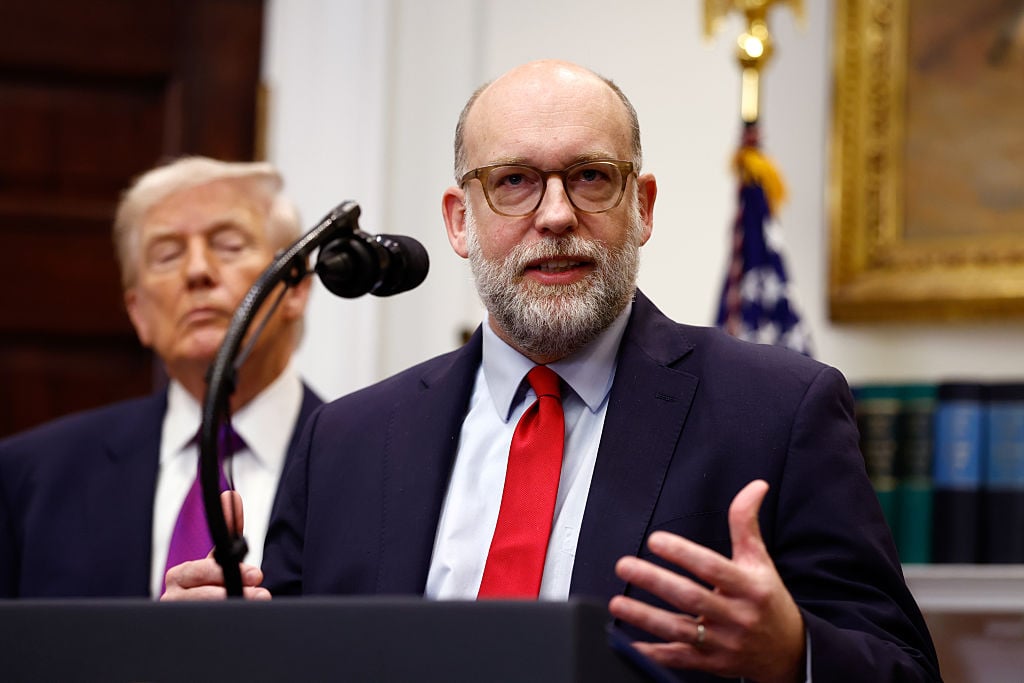
The Trump Administration has proposed what could be the biggest overhaul in years of how the federal government distributes billions of dollars in grants, requiring senior appointees to conduct “pre-issuance reviews” that critics say pave the way for political interference in what should be independent research funding.
Visit h-doctor.club for more information.
The proposal, which was more than 400 pages long and was published in the Federal Register Friday, by the Office of Management and Budget (OMB) calls for the review of awards on several grounds, including whether they “demonstrably advance the President's policy priorities.”
Agencies would also have broad authority to terminate awards if they decide that a grant no longer aligns with government goals or interests, similar to “termination for convenience” provisions in federal contracts.
The OMB frames the proposal, which follows an August 2025 executive order by President Donald Trump to oversight of grantmaking, as a means to increase transparency and ensure “American tax dollars are not wasted or misused.” It echoes statements that OMB director Russell Vought wrote in the Heritage Foundation’s conservative governance blueprint Project 2025, in which he envisioned the office as the “keeper of ‘commander’s intent.’”
Vought’s office also argued in the proposed rules that the Biden Administration demonstrated lack of transparency and oversight, claiming that federal awards were often used during those years to “promote a ‘woke’ policy agenda that did not reflect the values of the vast majority of the American public.”
More than $1 trillion a year is distributed for research grants as well as support for local governments and small businesses. But the latest proposal, which is in its public comment period until July 13 and which the White House budget office aims to implement by October, could threaten ongoing research and programs, including in sectors like science and health.
During the early days of Trump’s second term, his Administration tried to freeze federal grants, a move it later reversed after legal hurdles and vocal opposition. But the latest proposal could allow his Administration to target grants anew, this time with an ideological lens.
Threatening scientific independence
Researchers and scientists sounded the alarm about the proposal, saying that political appointees’ interference into which grants get approved could stymie the U.S. from leading in research and scientific development globally.
Under the proposal, appointees should evaluate grants’ adherence to “Gold Standard Science,” a nod to Trump’s May 2025 executive order, which some critics have raised concerns about for potentially impeding scientific independence and injecting politics into research.
The OMB proposal also states that “peer review remains advisory and does not replace agency discretion,” in an apparent departure from the post-World War II practice of funding approval traditionally being determined by apolitical experts who assess awards based on scientific merit.
Elizabeth Ginexi, a former National Institutes of Health program officer for more than two decades, wrote on Substack on May 29 that what the OMB is proposing “is not a reform of grants management” but “a complete political control apparatus layered over every stage of the federal science funding lifecycle.”
Rep. Zoe Lofgren (D, Calif.), the ranking member on the House Science, Space and Technology Committee, in a May 29 statement called the OMB proposal the “newest dystopian move” that would “destroy what remains of merit-based review dealing a crippling blow to science.” Lofgren added that the Trump Administration has spent its term so far “undermining merit-based decision-making at federal science agencies.”
Forcing ideological alignment
The proposal explicitly states that as part of the review, appointees must ensure that discretionary awards “must not be used to fund, promote, encourage, subsidize, or facilitate: (i) Racial preferences or other forms of racial discrimination by the recipient, including activities where race or intentional proxies for race will be used as a selection criterion for employment or program participation; (ii) Denial by the recipient of the sex binary in humans or the notion that sex is a chosen or mutable characteristic; (iii) Illegal immigration; or (iv) Any other initiatives that compromise public safety or promote anti-American values.”
The Trump Administration has called for screening “anti-Americanism” in other policies, including anti-terrorism and immigration control. But rights groups have criticized the term as it may be discretionarily applied to a broad swath of activities and could be used to stifle freedoms.
Diane Yentel, president and CEO of the National Council of Nonprofits, which represents more than 30,000 American nonprofits, said in a May 29 statement that the OMB proposal may also “profoundly impact” nonprofits partnering with the federal government in delivering services to communities across the U.S., such as in housing, health, education, food, shelter, and disaster recovery.
According to the New York Times, in the weeks before the OMB proposal emerged, the White House appeared to foreshadow its plans, citing a May memo that it obtained that instructed federal agencies to inventory grants given to “certain nonprofit organizations.” Among the about four dozen organizations listed were the American Civil Liberties Union, the National Urban League, and other legal aid groups that conservatives have long criticized, the Times reported.
The proposal also specifically instructs agencies to ensure that federal awards are not used for “diversity, equity, and inclusion” (DEI) initiatives, and “gender ideology,” as the Trump Administration has limited its recognition of sex to which a person is assigned at birth.
The Human Rights Campaign, an LGBT advocacy group, said Thursday in a social media response to the proposal that it would “strip government money from any program that acknowledges diversity, abortion, or even the existence of transgender and nonbinary people.”
“Withholding public grants from programs that depend on them because you refuse to acknowledge the humanity of certain communities is not good government,” the HRC statement added. “It’s fascism.”