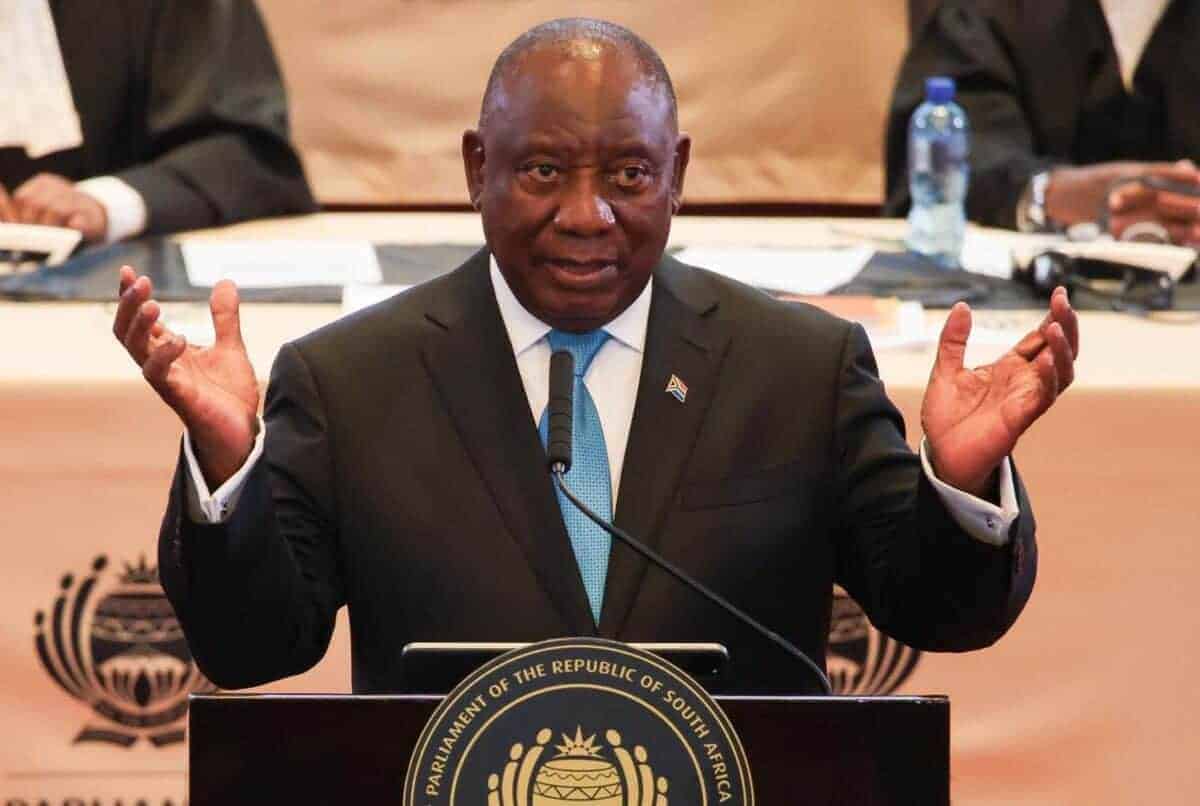
President Cyril Ramaphosa will address the National Assembly on Tuesday to deliver the 2026/2027 Presidency Budget Vote, a decisive blueprint to drive economic growth, tackle poverty, and strengthen South Africa’s governance under the Government of National Unity (GNU).
He returns to Parliament amid heightened political tensions and the looming Section 89 impeachment inquiry.
Visit chickenroad-game.rodeo for more information.
Budget Vote
The presidency said the Budget Vote for 2026/2027 includes specific allocations for key sub-departments within the Presidency, including the State Security Agency, the Government Communication and Information System and Statistics South Africa.
“Centred in this year’s Budget Vote are priorities such as an intelligence-led approach to dismantle criminal networks, coordinating government communication for an informed, empowered citizenry, as well as modernising national statistics.
“This is geared to help combat misinformation and advance evidence-based decision-making in service delivery,” Ramaphosa said.
Debate
Ramaphosa’s delivery of the Budget Vote address is customarily followed by a debate among Members of Parliament.
He will reply to this debate on Wednesday.
“The President’s Budget Vote tabling represents practical checks and balances on Parliament and an accountability mechanism for the public to monitor how public funds and resources are allocated,” the Presidency said.
Sona
During his State of the Nation (Sona) address in February, Ramaphosa said the primary focus for 2026 was to step up the fight against organised crime and criminal syndicates through technology, intelligence, and integrated law enforcement.
Following the much-anticipated address, opposition political parties called on Ramaphosa to ensure that the commitments he made during his Sona are not empty promises, especially in a country currently battling the digital divide.
Data analytics
Ramaphosa noted that, through the effective use of data analytics and AI, they will target high-risk sectors such as tobacco, fuel, alcohol, and counterfeit products as part of a national illicit-economy disruption programme.
Regarding economic growth, Ramaphosa identified the digital economy as a sector where young people will find employment opportunities.