The United States is fighting, in some form or another, with almost everyone. America’s in a hot war with Iran and a cold war with China and Russia (even if President Trump hasn’t figured that out). Trump has ignited various trade wars, and keeps talking up a possible conflict with Cuba. And just for good measure, the president seems still obsessed with grabbing Greenland, which would spark a confrontation with NATO, the most powerful and successful alliance in history—and one supposedly led by Washington.
Visit palladian.co.za for more information.
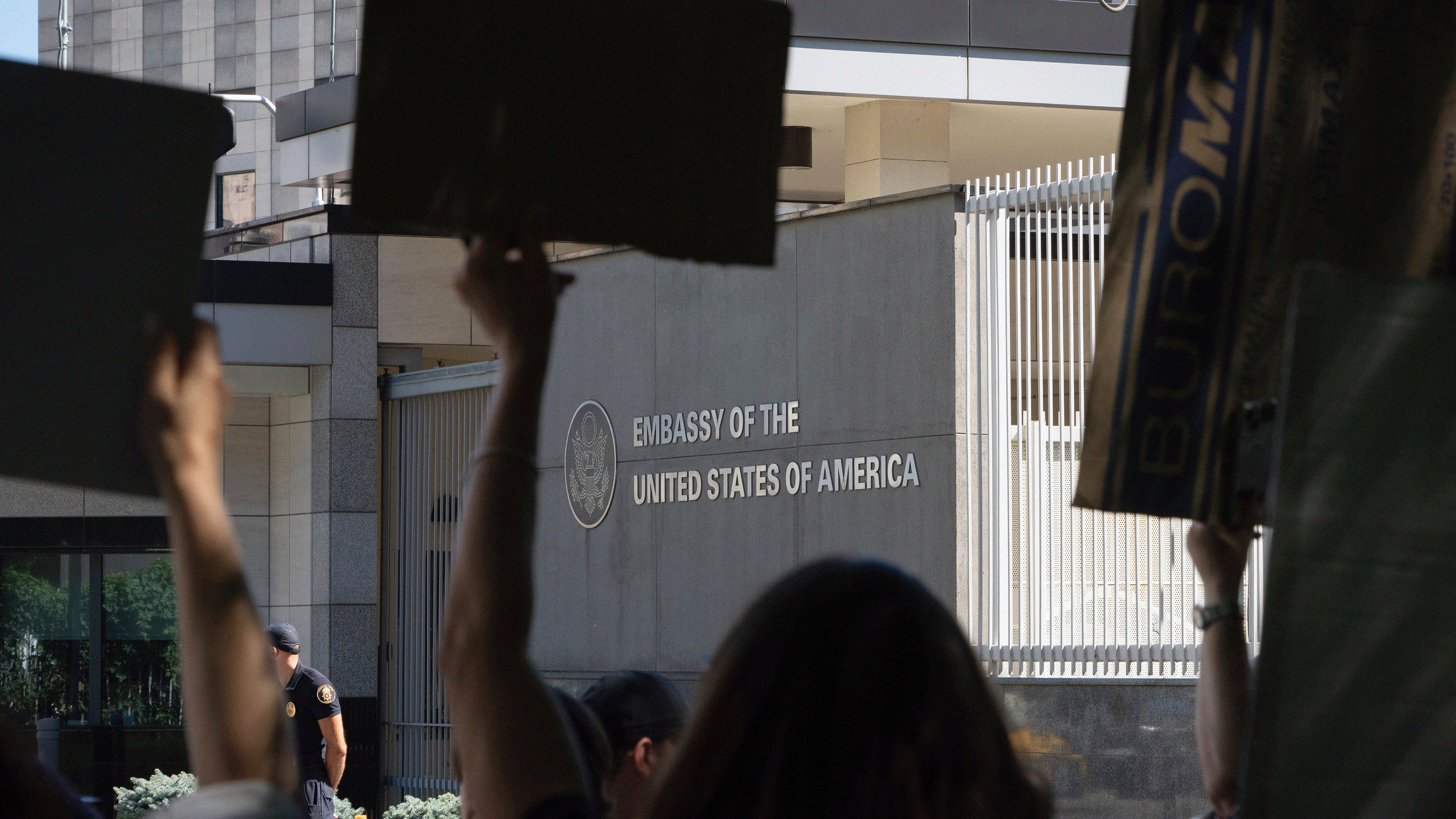
This might seem like a good time for some traditional diplomacy: deploying ambassadors to smooth ruffled feathers, assure friends and warn enemies of American resolve, and work out details on trade and other issues that require professional attention. The problem is that those ambassadors don’t exist. As The Wall Street Journal reported last week, the Trump administration has left more than 100 ambassadorships unfilled, including some to important U.S. allies.
This is an unprecedented number of vacancies, even for a White House that has shown little interest in traditional diplomacy. (At the same point in Trump’s first term, only 45 slots were unfilled, which was nonetheless a slower rate of nominations than those of his predecessors.) The American Foreign Service Association, the union that represents Foreign Service officers, told the Journal that Trump “has been slow to nominate ambassadors, and those he nominates can often be held up in an increasingly slow and logjammed Senate confirmation process.”
Well, yes—but that’s a polite way of saying that Trump doesn’t understand the importance of ambassadors, and that he prefers to hand out such posts to friends and cronies, who will face tougher-than-normal Senate fights. In his usual personalized and chaotic way, he appears to bestow these appointments not to serve U.S. diplomatic goals, but to reward loyalty and, perhaps, troll the American public and the international community.
In fairness to Trump, every president reserves some ambassadorships for donors and pals; some of them end up doing fine work, and others should never have been allowed to represent the United States overseas. Typically, however, these political ambassadors are given a cushy job in a smaller or less strategically important nation. (Kari Lake, for example, is an extreme MAGA loyalist and a failed political candidate; she has been named the U.S. ambassador to Jamaica, a thoughtless slight to an American friend.) It’s bad enough to do this to such nations, but as I wrote this past winter, Trump has placed utterly embarrassing and incompetent people in major embassies, including in Jerusalem and Paris.
[Anne Applebaum: What did Jamaica do to deserve this?]
These appointments not only express Trump’s seeming disdain for diplomacy but reflect his long-apparent distrust of experts in general and professional diplomats in particular. Administration officials see no problem here, and told the Journal that “Trump leans on trusted envoys to manage relations with multiple countries at a time, which they say offers the president a more efficient model for his chosen envoys to deliver on his foreign policy needs region-by-region,” such as using Tom Barrack, Trump’s ambassador to Turkey, to also serve as his envoy for Syria, and relying on friends and family members such as Steve Witkoff and Jared Kushner as personal emissaries.
The claim that this is a “more efficient model” is laughable. Trying to mediate a war between Russia and Ukraine without having confirmed ambassadors in either Moscow or Kyiv is not “efficient”; it is foolish. Likewise, dual-hatting ambassadors does not give their activities a broader regional coherence: It simply clogs their bandwidth, cross-wires staffs, and snarls communications channels. For example, not only is the ambassador to India, Sergio Gor, now America’s top diplomat to the world’s largest democracy; he also has some sort of responsibility for Central Asia, a region of approximately 85 million people and five very different nations—four of which still have no confirmed ambassador.
The Trump administration has never, to steal a phrase often used by former British Parliament Speaker John Bercow, given a flying flamingo about efficiency. So what’s behind all of these vacancies?
Trump likely has no real idea what ambassadors do, and apparently doesn’t care to. Secretary of State Marco Rubio, however, is not a political neophyte, and he knows what diplomats do, even if the president does not. He recognizes that ambassadors are important in day-to-day diplomacy and that they can be crucial during a crisis, when a foreign government wants to know that it is interacting with someone who has the full authority to speak on behalf of the president of the United States.
And yet, one of Rubio’s first actions as secretary was to recall 30 ambassadors. The State Department described this as a routine move, but that’s misleading: All ambassadors submit their resignation at the beginning of a new administration, and then they remain at their post until they are asked to extend their tour or a new ambassador is sent to replace them. But they are not usually recalled—that is, brought home immediately and leaving the office vacant—at the beginning of a new president’s term, and Rubio’s move suggested that some sort of political vetting was being applied to career diplomats.
Trump may also be extrapolating from his first term, and especially his first impeachment, when people in the government blew the whistle on his attempts to blackmail Ukraine into investigating Joe Biden and his family. He may have subsequently concluded that professional civil servants and diplomats are his political enemies. Of course, the president has never shown an understanding of apolitical service to the United States; any number of matters, including his White House ballroom and his proposed fund for supposed victims of the Justice Department, suggest that Trump’s conception of the U.S. government is that it is little different from a company that he owns, in which everyone works for him. And if they’re not supporters, they’re opponents.
[Vivian Salama: The end of diplomacy]
But maybe, in the end, Trump simply doesn’t want anyone representing him whom he can’t trust to keep his secrets and do his bidding, especially if what he wants is unethical or even possibly illegal (such as his chicanery with Ukraine in 2017). In the classic 1990 film Goodfellas, a New York hoodlum describes his boss, Paulie, as a guy who hated group conferences of any kind, because he “didn’t want anybody hearing what he said, and he didn’t want anybody listening to what he was being told.” Instead, Paulie’s trusted lieutenants move from person to person, talking with various would-be partners and supplicants, and then go back and whisper in Paulie’s ear.
Trump’s approach to diplomacy may be that simple: If you want to communicate with the United States, you wait until someone the boss trusts comes to you. Otherwise, you don’t waste your time talking with professional diplomats. As Reuters reported this week, foreign governments are bypassing embassies and instead “rewiring their diplomacy around a small circle of people with direct access to the president.” Unfortunately, if you’re a country such as Greece and you’re stuck with Kimberly Guilfoyle, Donald Trump Jr.’s ex-girlfriend, as the ambassador, you might not have many productive interactions with the American government for a while. But if you matter enough to Trump to get a visit from his son-in-law, then you know you’re talking with Washington.
The world will not come to a halt if the United States does not have an ambassador in every embassy. Some vacancies are normal, and the influence of U.S. ambassadors rises and recedes depending on the needs and views of each president. But Trump’s various diplomatic failures, including his serial humiliations at the hands of the leaders of China and Russia, his backtracking on his trade wars, and his inability to gather allied support for operations in the Middle East, all suggest that this is no way to run the diplomacy of a superpower.