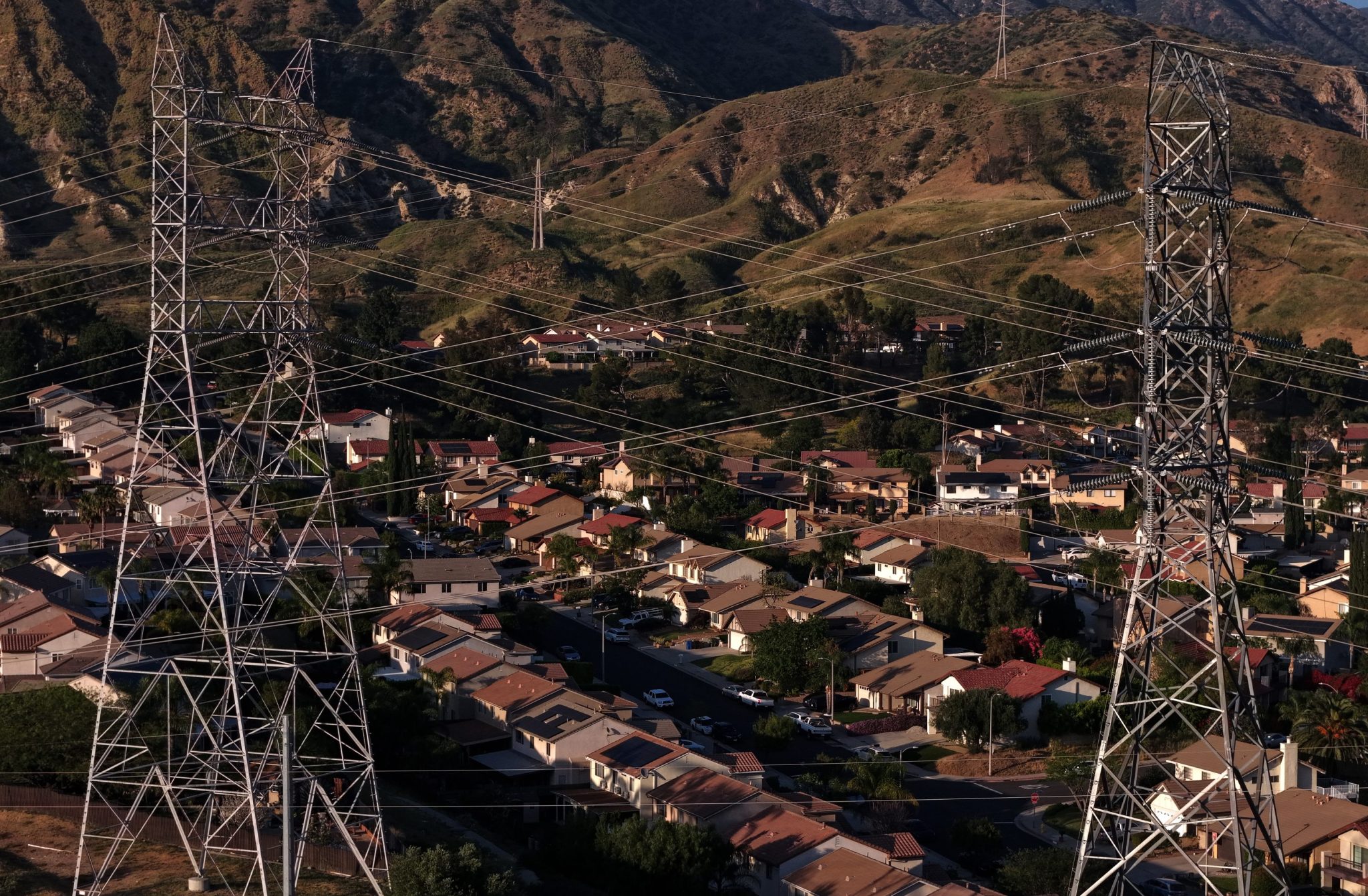
Last year increasingly looks like a turning point for American electricity bills. Retail electricity prices rose 7% in 2025 alone, part of a nearly 40% climb since 2021 that has made this decade the fastest period of electricity price growth on record. Wholesale costs are now 6.1% higher than a year prior — almost double the overall inflation rate — and Americans have grown louder in blaming the most visible new culprit: power-hungry data centers.
Visit moryak.biz for more information.
The real picture of Americans’ surging electricity costs is more nuanced, and yet the worst may still lie ahead. In the first three months of 2026 alone, utility companies requested state commissions to approve rate increases worth $9.4 billion, according to a report published Tuesday by PowerLines, a nonprofit focusing on utility regulation. That followed a record-breaking 2025, when utilities requested $31 billion in rate hikes for the full year — more than double the $15 billion sought in 2024. Critically, nearly half of those 2025 requests had not yet been approved as of early 2026, meaning a significant wave of increases is still working its way to consumers’ bills.
Americans spent on average $110 more on electricity last year than in 2024, according to a March report by Democratic members of the Joint Economic Committee — and that was before the backlog of pending rate cases began clearing. Rising power bills have become a political flashpoint for state politicians, who accuse utilities of chasing profits, while electricity costs have featured prominently in local opposition against data center construction that has swelled in communities nationwide.
But the AI infrastructure boom is not the only reason prices are soaring. A look at where in the country prices are projected to rise fastest suggests data centers might have taken the brunt of blame when a slew of other forces are also responsible, including weather damage and the costs of upgrading an aging grid. It’s worked out handily for utilities — most of which are billion-dollar public companies — that have registered record profits in recent years.
“The scapegoat has been data centers, because that’s the most visible new entrant on the scene,” Charles Hua, founder and executive director of PowerLines, told Fortune. “There may be some truth to that, especially in some geographies, but that’s not the biggest reason why bills have been going up over the last five years.”
Power Bills’ Moving Parts
The sharp increase in electricity prices has been widespread, though not uniform. The recent Congressional report found that while a handful of states have seen flat electricity prices or even slight declines, several watched their bills rise more than 10% last year.
The PowerLines report came to a similar conclusion. Of the total $9.4 billion requested in rate hikes, $4.4 billion was from utilities servicing the Western U.S., $2.7 billion in the South, $1.2 billion in the Northeast, and $1.1 billion in the Midwest.
Western utilities requested higher rates than other areas primarily because of damages and risk stemming from wildfires, Hua said. It was a similar story in the South, where Hurricane Helene caused extensive damage to grid infrastructure in 2024. Georgia Power, the state’s largest utility, took on debt worth hundreds of millions to recover from the storm and this year requested more than $900 million in rate increases, according to the PowerLines report.
“One of the big drivers of price increases over the last five years has been extreme weather events,” Hua said. “That’s nobody’s fault necessarily, but nonetheless it’s taking a toll on the grid and costing consumers.”
Data centers, meanwhile, have a much more localized impact. Where they are built, particularly steep power bill hikes tend to follow. In Virginia, an epicenter of the data center boom, power company Dominion Energy requested state regulators to approve $70 million in further revenues next year, to “construct and operate” a 3-gigawatt natural gas plant and related transmission infrastructure to help supply the state’s growing data center-driven power needs.
In neighborhoods located near data centers, electric bills have risen as much as 267%, according to a Bloomberg analysis. In the PJM Interconnection, a grid that covers 13 states in the Northeast and Midwest and a hotspot for data center construction, an independent monitoring report this month warned that data center-driven demand had already driven up consumer power bills by $13.8 billion.
The Cost of Progress
While data centers are a big part of price hikes in some parts of the country, they remain far from the only factor — especially outside of construction-heavy grid zones like PJM.
“Nobody’s really explaining why [prices] are going up, and so a lot of people are naturally drawing the conclusion, ‘it must be that data center.’ But the reality is more complicated than that,” Hua said.
In addition to extreme weather, consumers are being saddled with the consequences of a utility company spending spree. A recent PowerLines report found capital spending plans from investor-owned utilities through 2030 have risen 27% over the past year, now reaching $1.4 trillion — costs that are already trickling down to consumers. Part of that is due to more transmission and power generation capacity to service the AI construction boom, but a significant share is earmarked for upgrades, repairs, and maintenance of an aging grid system.
Operators have been ramping up their spending to refurbish infrastructure for years. Last year, the Edison Electric Institute, a trade association representing investor-owned utilities, reported its members had collectively invested $1.3 trillion over the past decade in grid enhancements.
While modernizing the grid remains a necessary expense, the share of costs passed to consumers is largely up to the companies themselves, according to Hua.
“None of this is inevitable,” he said. “Utility bills do not have to go up. It is an active choice in many instances, because these prices are ultimately determined almost unlike any other product.”
Investor-owned utilities, which supply around three quarters of the country’s electricity, have reported enormous profits in recent years. Between 2021 and 2024, collective profits at 110 publicly listed utility companies rose from $38.8 billion to $52.5 billion, according to a March analysis by the Energy & Policy Institute, a watchdog group. Over that period, utilities kept an average 12.8% of revenue as profit, while preliminary 2025 data suggested margins rose to an average 14.6%.
Advocates defend utilities’ profit motive as helping drive innovation, though Hua criticized the model as outdated since it often prioritizes expensive capital projects over consumer affordability. A growing suite of so-called grid-enhancing technologies, such as systems that can naturally divert electricity from overloaded lines to underserved areas, would likely help improve efficiency, but many utilities have resisted integrating them, a fact that has energized Democrats this year.
“The good news is that we have quick, ready-to-deploy solutions,” Rep. Kathy Castor (D-Fla.), ranking member of the Energy and Commerce Subcommittee on Energy, said during a hearing last month.
“The challenge is that barriers to deployment and savings stand in the way, especially the misaligned incentives that reward utilities for selling as much power as possible and making large capital investments rather than efficiently using the right power, in the right place at the right time,” she said.
With a growing share of Americans turning against the AI construction boom, data centers have become a convenient lightning rod for rising power bills. But the forces driving this decade’s electricity price surge — aging infrastructure, extreme weather, and a utility spending spree set to reach $1.4 trillion by 2030 — were building long before the first server farm broke ground. The bills arriving in mailboxes today largely reflect decisions made years ago. The ones reflecting decisions being made now haven’t arrived yet.
This story was originally featured on Fortune.com