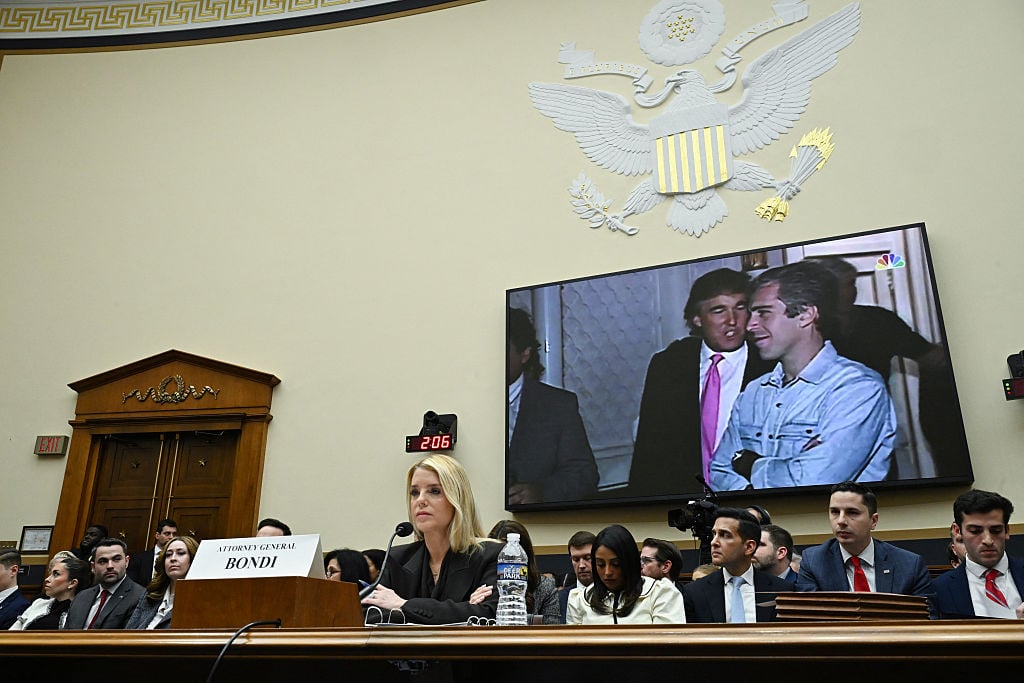
Last week, Acting Attorney General Todd Blanche said he would support alleged victims of convicted sexual offender Jeffrey Epstein publicly testifying in front of Congress. This echoes First Lady Melania Trump’s recent call for such a hearing. Epstein died before he was formally convicted of sex trafficking, but the FBI has estimated that Epstein harmed more than 1,000 victims.
As a psychologist who has researched the effects of trauma and has treated survivors for the past 25 years, I join the call for a public hearing. It would be good not only for accountability of perpetrators, but it is in line with recent data showing the resounding effects of public testimony for survivors of sexual violence—and not just Epstein’s victims. Public testimony and subsequent public dialogue could be the healing moment necessary for this uniquely dark situation.
Visit michezonews.co.za for more information.
This month saw the publication of a new study on the effects of the disclosure of sexual violence; as it happened, one of the co-authors was Christine Blasey Ford, the psychology professor at Stanford who testified before Congress in 2018 about the alleged sexual assault perpetrated against her in high school by then-Supreme Court nominee (and now Justice) Brett Kavanaugh—which Kavanaugh strongly denies.
The study’s findings have direct implications for what might happen if women who allege they were sexually trafficked by Epstein were allowed to testify in front of Congress. After Ford’s testimony, she received an outpouring of letters from women in all 50 states and 42 countries, who had their own histories of sexual trauma unconnected to Ford’s case. The authors of this new study took a de-identified sample of Ford’s mail, letters from women who discussed being survivors of sexual violence, and put them into two groups for comparison: those who chose to disclose their trauma histories and those who did not.
Echoing findings from other studies, many women talked about negative experiences coming forward publicly, and those who did not disclose their histories to others provided reasons such as shame, avoiding thinking about the trauma, and their fear of family, friends, or intimate partners’ responses.
What was new was that women who had never before disclosed their traumas wrote that they were inspired by Ford to relieve their own shame by telling others. Ford’s highly publicized allegation helped move these women from silence to liberation. In a sense, this was what psychologists might consider to be a healing intervention.
This is similar to the effects of the #MeToo movement, with individuals coming forward on social media to disclose their trauma, connect, and provide support to others.
Nearly half of women experience some form of sexually violent contact, and almost one in five experience a completed or attempted rape. Yet most survivors never report their experiences to the police or seek medical evaluation. If they tell someone, they usually start with a family member or friend. Many stay silent, concerned about victim-blaming and associated stigma. When survivors do choose to disclose, it is estimated that up to two-thirds receive a host of negative reactions: dismissal, disbelief, and blame. Some have called enduring such negative experiences a “second assault.”
A review of 51 studies showed that negative social reactions to disclosure were linked with worse emotional difficulties, such as increased PTSD, depression, and anxiety. One of the psychologists who has been at the forefront of studying social reactions to survivors’ disclosures is Sarah Ullman from the University of Illinois Chicago, who authored the book Talking About Sexual Assault: Society’s Response to Survivors. I asked her what she thought the effect of having Epstein’s survivors testify might have on them directly and other survivors around the world.
“It can be empowering and healing, especially given that they are collectively speaking out,” Ullman said. “That is more likely if society and leaders recognize them with respect and respond in a positive way: listening to their accounts, believing them, honoring their bravery, and supporting their quest for justice.”
I also asked Ullman what she thought the public could do to create safer contexts for disclosure. “We all need to support survivors by listening, believing, and offering support,” she said. “Creating safe spaces for survivors may include support/therapy groups, moderated/closed survivor online forums, and anti-violence activist projects. This is needed whether survivors are those of high-profile perpetrators or not, and particularly for more marginalized survivors who are often less valued, heard, or able to receive support, supportive services, or any kind of justice.”
I agree. I am grateful that Acting Attorney General Todd Blanche and First Lady Melania Trump have expressed support for a public testimony. I believe Ford’s study, analyzing the mail she got, showing that she inspired other survivors to own their truth and move forward in their healing journey, can have similar effects.
Let Epstein’s survivors be heard by Congress and see the empowering effects it could have on all survivors of sexual violence.