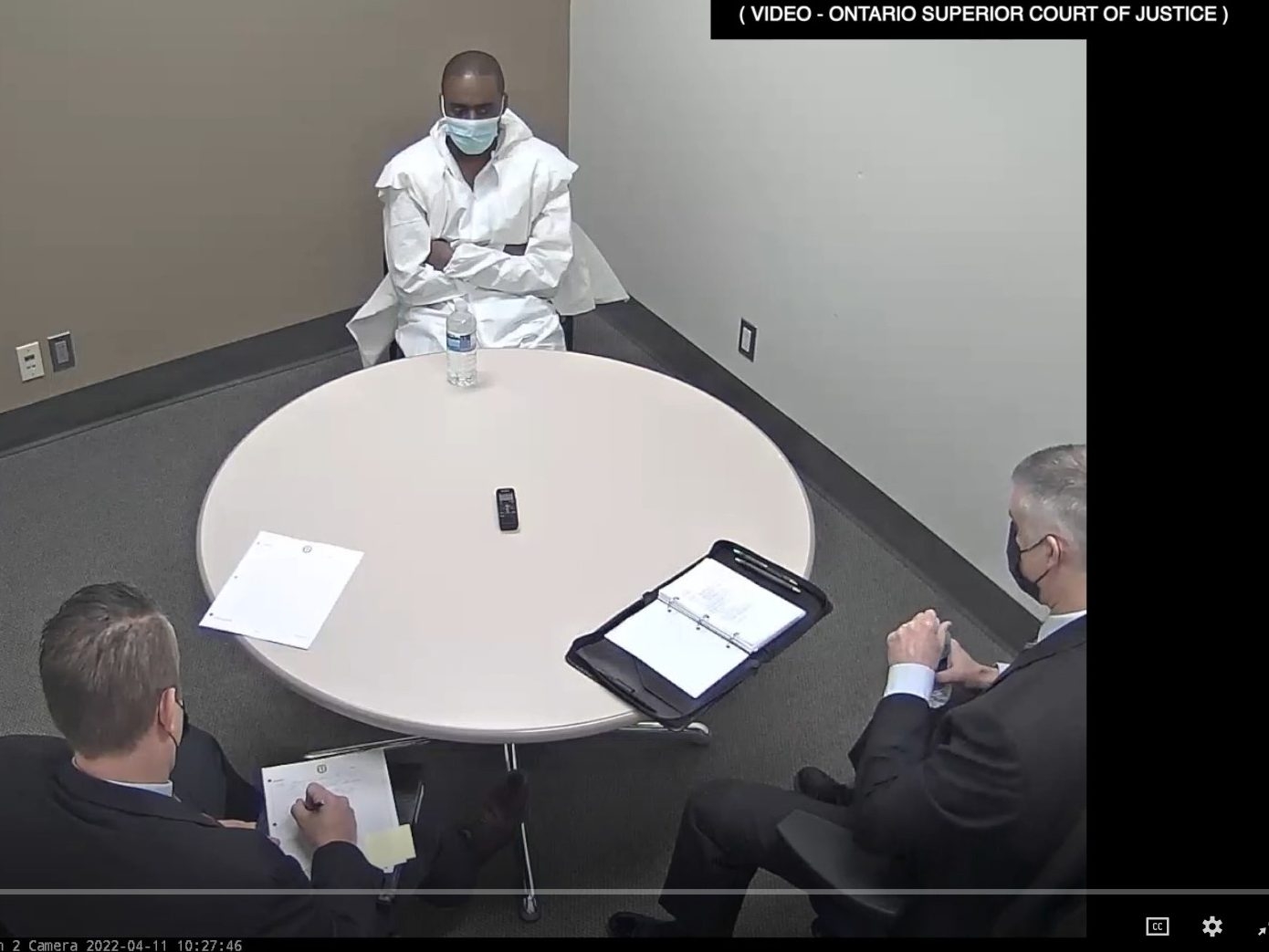
When Richard Edwin went hunting for strangers on Toronto streets three years ago, it was his own evil — and not “voices” — that made him do it.
Visit solvita.blog for more information.
As his victims’ loved ones looked on, Superior Court Justice Jane Kelly found Edwin guilty Monday of two counts of first-degree murder in the senseless and shocking shootings two days apart of international student Kartik Vasudev, 19, and Elijah Mahepath, 35, rejecting the killer’s claim that he was not criminally responsible due to a mental disorder.
“There is no evidence that Mr. Edwin was experiencing command hallucinations or delusions at the time of the killings, other than the inadmissible hearsay reports he provided to the forensic psychiatrists. There are no contemporaneous utterances, for instance, supporting such an inference. The first time Mr. Edwin describes such experiences was when he spoke to (the psychiatrists) years later after being incarcerated for two counts of first-degree murder,” Kelly said in her ruling.
Edwin, 43, showed no emotion as the judge read her lengthy judgment.
He had told two forensic psychiatrists that he was just following the orders given by the “body language community” — friendly allies in his long-time battle against white supremacists who would send him signals to kill.
He told Dr. Lisa Ramshaw, who testified for the defence that he should be found NCR, said that he had to listen and execute two strangers or else white supremacists would come from Ukraine to assassinate him and they’d drop “air bombs” on St. Lucia, where his father lived, or on Jamaica, where his mom often resided.
Sold bizarre pamphlets
First diagnosed with schizophrenia in 2010, court heard Edwin reportedly stopped taking anti-psychotic medication days after they were prescribed. After dropping out after one semester at York University, he sold self-published bizarre Black history pamphlets filled with conspiracy theories.
Edwin had also legally amassed an arsenal of five guns to protect himself from what he believed to be an impending economic collapses that would bring riots to the streets. He said he’d bought his first three — two handguns and a rifle — about five years before the killings and the AR-15 rifle and 9 mm Smith-Wesson handgun one to two years before.
On the day of the first shooting, he said he’d packed a survival bag with a tent, peanut butter, his AR-15 rifle, and a handgun, and was headed “to the woods” when he realized he still had his cellphone and returned to leave it in his room so the government couldn’t track him.
As he headed out again, he told the psychiatrist that he hallucinated about the man who told him to “shoot that guy, so I shot him.”
Edwin shot Vasudev, a student from India, numerous times in the back at close range outside Sherbourne TTC station on April 7, 2022. Seven of the bullets were fatal.
After being told to “do more” two days later, Edwin said he went home and practiced shooting in front of a mirror, “as he did not want to shoot himself by accident.” He travelled to Dundas subway station and walked to TMU but was told by the voice to “hold back” and not shoot.
He then walked west on Dundas St. and saw his second victim.
“And then the voice said, ‘F— it, shoot him’ … so I shot him in the back.”
Victim shot five times in back
Mahepath had just gotten off a bus near Dundas and Sherbourne when Edwin shot him five times in the back.
Kelly found that while Edwin was suffering from a major mental illness at the time, he was also functioning: he had his own small apartment on Spadina Ave., used the TTC and made a living selling his magazines.
The shootings were also planned and deliberate, she said.
Edwin’s computer search history show they were planned over time: he researched violence — “how to win a gunfight,” “how to watch your back” — and how to “pack your stuff to move,” suggesting he was planning to leave Canada after the murders.
Edwin left his home both times with a concealed and loaded firearm; his escape after the murders showed “organized and purposeful thought” as he’d calmly change his appearance and later disposed of the clothing he was wearing.
“There is nothing to indicate that Mr. Edwin’s mental illness rendered him incapable of knowing that his actions were wrong,” she concluded.
And so the double killer will automatically serve a life sentence with no chance of parole for 25 years.
The victims’ families are scheduled to deliver their impact statements Tuesday afternoon.