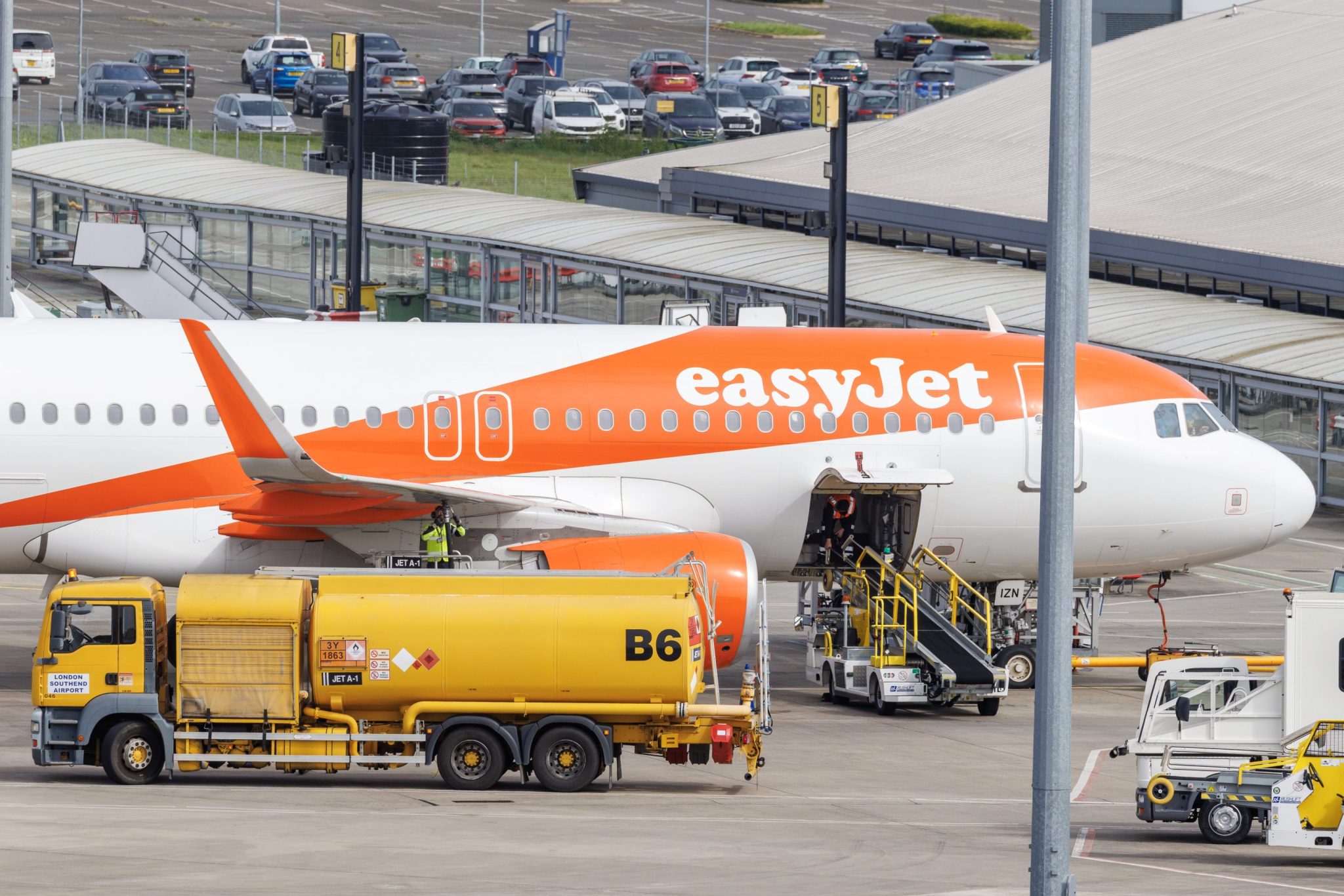
Airline passengers should brace for more aggravation in the next few months as carriers around the world deepen cancellations and ground planes to cope with stratospheric increases in jet-fuel prices.
Dutch flag carrier KLM is the latest company to cut its schedule, saying Thursday it will scrap 80 return flights at Amsterdam’s Schiphol Airport in the coming month. That puts it in the same league as United Airlines Holdings Inc., Deutsche Lufthansa AG and Cathay Pacific Airways Ltd. which have all pruned itineraries to contain the damage.
Visit casino-promo.biz for more information.
Global capacity for May has been reduced by about 3 percentage points, with all but one of the 20 largest airlines slashing flights, according to data compiled by analytics firm Cirium Ltd. It’s revising an initial prediction of 4%-6% growth for the year and says a decline of as much as 3% is possible under certain conditions.
“It appears extremely likely that more reductions are ahead,” wrote Richard Evans, a senior consultant at Cirium, in a report released Thursday.
The disruptions roiling the aviation industry after the war in Iran started were initially limited to Middle Eastern airlines, their airports and airspace. They’ve since become contagious and threaten to upend the lucrative summer travel season globally. And with the US naval blockade of the Strait of Hormuz cutting off Iranian oil shipments, there’s no immediate end in sight.
“Any flying that we’re doing that’s on the margin, maybe not producing the yields we’d like, is likely going to be reconsidered,” Delta Air Lines Inc. Chief Executive Officer Ed Bastian said while announcing an extra $2.5 billion in fuel costs this quarter. “This is going to be a test for the industry.”
Compounding the challenge are concerns about whether there’s even enough jet fuel to go around. The International Energy Agency says Europe has “maybe six weeks” of supplies left, and Ryanair Holdings Plc, Virgin Atlantic Airways and EasyJet Plc only gave forecasts on availability that didn’t stretch beyond mid-May.
The European Union said it may face supply issues for jet fuel “in the near future.” The bloc is preparing a joint action plan in case the situation in the Strait of Hormuz persists, a spokesperson said Friday in Brussels.
For now, the industry may have gained some breathing room when Iran said Friday the strait was “completely open” to commercial traffic. Benchmark Brent crude subsequently fell as much as 11%. But any agreement remains brittle, with both sides seeking to maintain leverage in the conflict.
The recent adjustments in capacity signal that many airlines are entering self-preservation mode with the expectation that the conflict will be detrimental to business for the foreseeable future. Even if all fighting ends soon, damaged infrastructure will likely take months or years to repair.
Lufthansa, Europe’s biggest airline, took drastic measures this past week as a series of strikes exacerbated its fuel crisis. It shut down the CityLine unit, withdrawing 27 planes from service, and trimmed capacity across the rest of its network by grounding older, fuel-guzzling widebody jets.
“The package to accelerate fleet and capacity measures is unavoidable given the sharp rise in jet fuel costs and ongoing geopolitical instability,” Till Streichert, the group’s chief financial officer, said Thursday.
The list goes on. The group’s Edelweiss brand suspended Denver and Seattle flights and reduced frequencies to Las Vegas.
Air Canada on Friday announced that it has canceled services from Montreal and Toronto to New York’s John F. Kennedy airport, though it will continue to serve Newark and La Guardia.
Norse Atlantic ASA, a Norwegian budget airline, halted all flights to and from Los Angeles. Virgin Atlantic scrapped its London-to-Riyadh service after just one year in operation, and British Airways dropped its Jeddah route.
Nigerian airlines warned they’re “facing existential threats” and may halt flights in coming days unless measures are taken to lower fuel prices.
Qantas Airways Ltd. is reducing its flights to the US and will also cut domestic flight capacity by about 5% as it estimates an extra A$800 million ($575 million) on its fuel bill in the second half of its fiscal year.
Hong Kong’s Cathay Pacific is cutting 2% of flight frequencies across the Asia-Pacific region from mid-May to the end of June. Its money-losing budget unit, HK Express, is implementing a steeper 6% pullback.
The cuts come after fuel levies of as much as $400 were imposed on long-haul, round-trip services.
“We have pursued every suitable means to keep our flights operating as normal,” Cathay Chief Customer and Commercial Officer Lavinia Lau said in an April 11 release. “However, these measures have not been enough to mitigate the significantly increased fuel costs.”
Many European airlines are well-hedged on fuel at least for the coming months, while most US airlines — the biggest carriers in the world by capacity — don’t hedge and wind up facing the biggest bills.
United Airlines Holdings Inc. was among the earliest to earmark cuts, shaving 5% of capacity this year, with reductions through September. Delta is coping with its higher fuel bill by pushing through price hikes and making capacity reductions reaching about 3.5%.
Read More: Here’s How the Iran War Has Started to Reshape Global Aviation
Mainland China-based airlines, which also lack fuel-hedging protection, are stepping up daily flight cancellations, according to a Bloomberg News analysis of data from Chinese provider DAST. The uptick in cuts comes as Chinese carriers schedule fewer daily domestic flights, according to data compiled by BloombergNEF.
Scores of Chinese travelers have taken to social media to complain about late-notice cancellations just before the five-day “Golden Week” public holiday in May. And as travelers around the world book their summer and fall vacations, they may find that many routes to lesser-flown destinations have been wiped off the global aviation map.
“If the price of jet fuel remains elevated for an extended period there will be more cancellations,” said Dudley Shanley, an analyst at Goodbody.
This story was originally featured on Fortune.com