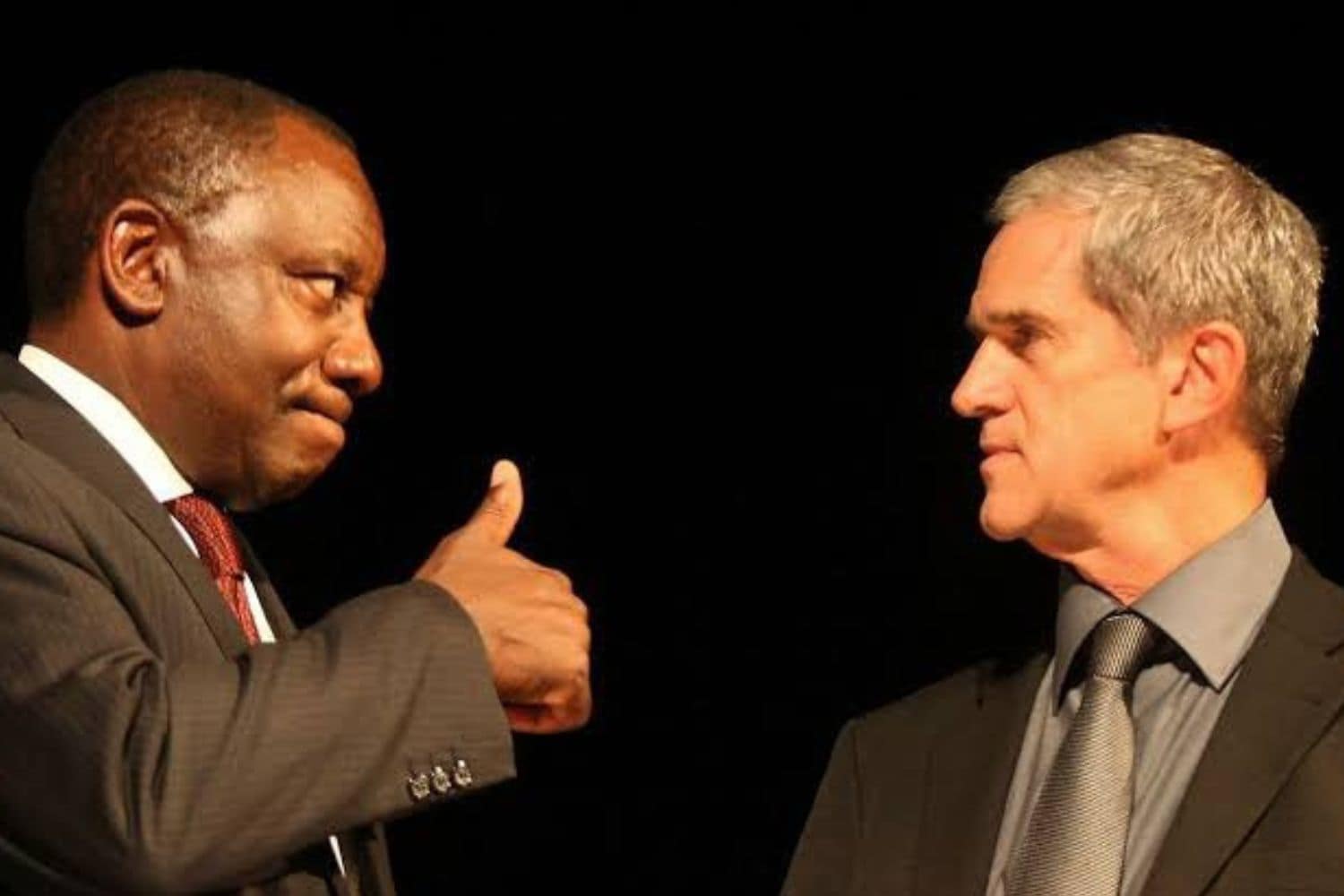
The appointment of Roelf Meyer as the new South African ambassador to the United States of America (US) has reignited debate about representation, symbolism, and political alignment in South Africa’s evolving democracy.
President Cyril Ramaphosa appointed Meyer as Pretoria’s ambassador to the US on Tuesday.
Visit aportal.club for more information.
South Africa has not had an ambassador in Washington since the Donald Trump administration expelled Ebrahim Rasool in March 2025, declaring him persona non grata and giving him just a week to leave the US over his comments about the administration.
‘Disappointing’
While Meyer’s appointment has been welcomed, Solidarity’s Dirk Herman, in a post on X, called it “disappointing.”
“He is a retired politician from a previous dispensation. His appointment will create no trust among ordinary Afrikaners. This is not the answer for the restoration of relations. It’s yet another mistake in the series of mistakes by the government with their relationship with the American government.”
‘Worst insult’
Lex Libertas’ Ernest Roets also expressed disappointment.
“The worst insult a negotiator can get is for the party across the table from you to think that you’re the best thing that ever happened to them. That’s the story of Roelf Meyer.”
Relationship with Ramaphosa
Political analyst and North West University Professor Andre Duvenhage notes that Meyer’s relationship with President Cyril Ramaphosa stretches back to the negotiations leading up to the 1994 democratic transition and the drafting of the 1996 constitution.
“At the time, Meyer accepted ANC membership and was involved in government activities,” Duvenhage told The Citizen.
“More recently, his appointment is seen by some as a gesture toward Washington, signalling that the South African government can appoint a white figure to demonstrate inclusivity beyond Black Economic Empowerment policies (BEE).
Political dynamics
Yet, Duvenhage argues the move is largely symbolic and unlikely to shift political dynamics.
“Roelf Meyer is not widely accepted within the broader Afrikaner community as representing mainstream views,” Duvenhage explained.
“This appointment remains ideologically aligned with the ANC, despite the difference in skin colour.”
Reactions from Afrikaner groups
The announcement has drawn sharp criticism from organisations such as Solidarity and Afrikaner interest groups.
Duvenhage believes this reflects a broader sentiment among Afrikaners and white South Africans who do not view Meyer as a defender of their interests.
“He is seen as someone supporting ANC policies rather than representing farming or Afrikaner concerns,” Duvenhage said.
“I expect more negative reactions from the broader Afrikaner community.”
Negotiator
The 78-year-old Meyer is a seasoned negotiator who played a pivotal role in the transition to democracy in the 1990s and brings immense experience in bridging deep political divides.
Meyer is famously known for his pivotal role as the chief negotiator for the white minority National Party government during the talks to end apartheid in the 1990s, where he worked closely with Ramaphosa, then the chief negotiator for the ANC.
Appointment worrying
International law expert Professor Andre Thomashausen told The Citizen that Ramaphosa’s appointment of Meyer is “worrying.”
“I suppose President Ramaphosa chose Roelf Mayer because of his long, long experience over the last 40 years in trying to bridge divides and trying to find difficult compromises.
“But it is a little bit worrying because it appears that we have run out of competent diplomats, so we have to go and find somebody in his very advanced age, nearly 80 years old, to try and do this difficult task of mending relations that are now really on a very, very low level. So, of course, everybody welcomes the fact that there’s finally an ambassador, and that South Africa is present again in Washington DC, Thomashausen said.
Divided opinion
Thomashausen stressed that there will be divided opinion on Meyer’s appointment.
“My biggest concern, and I think of most South Africans, is that Rolf Mayer is not a career diplomat. He’s never served as an ambassador before, and being an ambassador is also a speciality, a special and difficult undertaking, a difficult job it is, it is kind of worrying that, that in the whole Dirco, no career diplomat could be found for this, maybe the most important posting for South Africa’s future economic development.”
While Meyer’s appointment may carry symbolic weight internationally, domestically, it underscores the tension between political inclusivity and community representation.
For many Afrikaners, Meyer’s alignment with ANC policies overshadows his identity, leaving questions about whether the move will bridge divides or deepen scepticism.