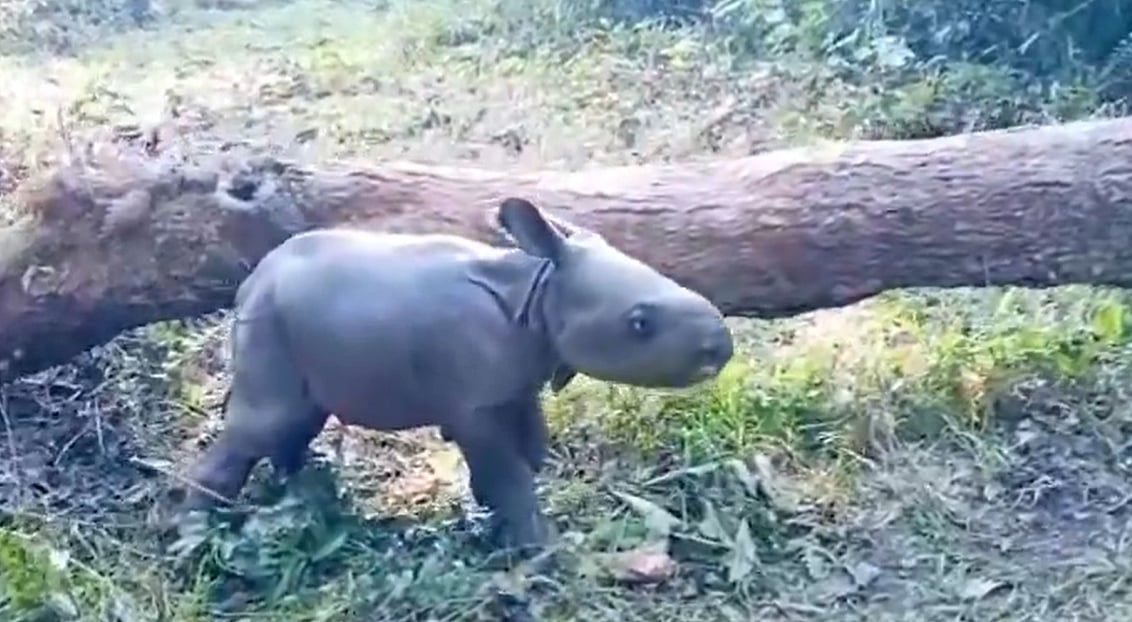
A heartwarming video showing a newborn rhinoceros calf has caught the attention of wildlife lovers online, offering a rare glimpse into how India’s national parks track and protect endangered species.
The clip, shared by Indian Forest Service officer Parveen Kaswan, features a one-day-old rhino calmly standing in its natural habitat. Along with the video, the officer explained that every rhino inside the national park is carefully recorded and monitored as part of conservation efforts.
Visit likesport.biz for more information.
A rare moment captured during patrol
The footage was not taken casually. According to Kaswan, forest staff recorded the scene while conducting routine patrol duties. The video was filmed from atop a trained elephant and zoomed in from a safe distance, ensuring minimal disturbance to the animals.
If you have never seen how a one day old rhino baby looks like.
— Parveen Kaswan, IFS (@ParveenKaswan) April 15, 2026
In our national park every rhino is recorded and monitored. pic.twitter.com/U26W5J8OVC
Wildlife monitoring teams regularly track newborn calves to maintain population records, observe health conditions, and strengthen anti-poaching protection strategies. Such documentation plays a crucial role in long-term conservation planning.
Internet reacts with awe, and concern
The video quickly gained traction online, drawing thousands of views and warm reactions from viewers who described the sight as both rare and deeply moving. Many users applauded forest officials for their dedication to protecting wildlife.
At the same time, some viewers questioned whether it was safe to approach a newborn rhino. Addressing these concerns, Kaswan clarified that getting close to rhino calves is extremely dangerous, as mothers are highly protective and can attack if they perceive a threat.
It’s not safe at all. They will obviously attack. The video is taken from an elephant, by zooming. During patrolling.
— Parveen Kaswan, IFS (@ParveenKaswan) April 15, 2026
Why distance matters around Rhino calves
Despite their calm appearance, rhinos are among the most defensive animals in the wild. Female rhinos are especially alert after giving birth and rely on strong maternal instincts to guard their young.
Forest officers follow strict protocols while observing wildlife, maintaining safe distances and using trained elephants or vehicles to avoid provoking animals. These practices help researchers gather valuable data without interfering with natural behaviour.