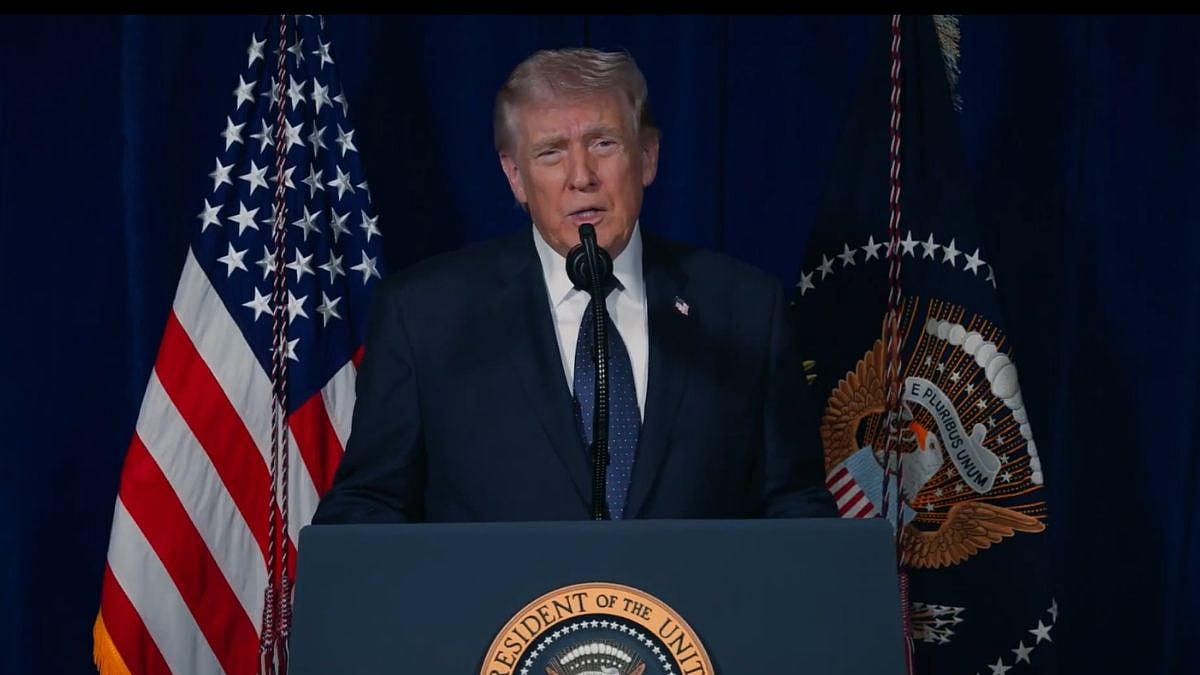
Washington: NATO Secretary-General Mark Rutte met behind closed doors with US President Donald Trump on Wednesday for discussions that were expected to focus on reopening the Strait of Hormuz, a vital shipping waterway – and on soothing Trump's anger with the military alliance over the Iran war.
Visit extonnews.click for more information.
It wasn't immediately clear how things went in the private meeting, ahead of which Trump had suggested the US may consider leaving the trans-Atlantic alliance after NATO member countries ignored his call to help as Iran effectively shut the strait and sent gas prices soaring.
The Republican president has had a warm relationship with Rutte in the past, and the meeting came after the US and Iran late Tuesday agreed to a two-week ceasefire that includes the reopening of the strait.
“NATO WASN’T THERE WHEN WE NEEDED THEM, AND THEY WON’T BE THERE IF WE NEED THEM AGAIN. REMEMBER GREENLAND, THAT BIG, POORLY RUN, PIECE OF ICE!!!” - President Donald J. Trump pic.twitter.com/xgEV8P1n4n
— The White House (@WhiteHouse) April 8, 2026
The nascent ceasefire was struck after Trump said he would strike Iran's power plants and bridges, threatening that “a whole civilization will die tonight”.
The White House did not immediately offer an update on the conversation. But earlier Wednesday, White House press secretary Karoline Leavitt acknowledged that Trump had discussed leaving NATO.
“I think it's something the president will be discussing in a couple of hours with Secretary-General Rutte,” Leavitt said.
The Congress in 2023 passed a law that prevents any US president from pulling out of NATO without its approval. Trump has been a longtime critic of NATO and in his first term had suggested he had the authority on his own to leave the alliance, which was founded in 1949 to counter the Cold War threat posed to European security by the Soviet Union.
'No Clear Exit Plan, No Direct Criticism Of NATO': Key Takeaways From US President Donald Trump's Address On Iran War | VideoThe crux of the commitment its 32 member countries make is a mutual defence agreement in which an attack on one is considered an attack on them all.
The only time it has been activated was in 2001, to support the United States in the wake of the September 11 attacks on New York and Washington.
Despite that, Trump has complained during his war of choice with Iran that NATO has shown it will not be there for the US Ahead of the meeting, Senator Mitch McConnell, a Kentucky Republican, issued a statement in support of the alliance, noting, “Following the September 11 attacks, NATO allies sent their young servicemembers to fight and die alongside America's own in Afghanistan and Iraq.” McConnell, who sits on a committee overseeing defense spending, urged Trump to be “clear and consistent” and said it's not in America's interest to “spend more time nursing grudges with allies who share our interests than deterring adversaries who threaten us”.
PRESS SEC: It’s quite sad that NATO turned their backs on the American people over the last six weeks when it’s the American people who have been funding their defense.
— Department of State (@StateDept) April 8, 2026
President Trump looks forward to having a very frank and candid conversation with Secretary Rutte. pic.twitter.com/lNvCIUhaqp
It's unclear if the Trump administration would challenge the law barring a president from pulling out of NATO. When the law passed, it was championed by Trump's current secretary of state, Marco Rubio, who at the time was a senator from Florida.
Rubio met separately with Rutte on Wednesday morning at the State Department ahead of the White House talks.
In a statement, the State Department said Rubio and Rutte discussed the war with Iran, along with US efforts to negotiate an end to the Russia-Ukraine war and “increasing coordination and burden shifting with NATO allies”.
President Donald Trump Threatens NATO Exit As Iran War Exposes Deepest US-Europe Rift In DecadesThe alliance was already rattled over the past year as Trump returned to power and reduced US military support for Ukraine in the war against Russia and threatened to seize Greenland from ally Denmark.
But Trump's badgering of NATO intensified after the Iran war began at the end of February, with the president insisting that securing the Strait of Hormuz was not America's job but the responsibility of countries that depend on the flow of oil through it.
“Go to the strait and just take it,” Trump said last week.
Trump was also angered as NATO allies Spain and France forbade or restricted use of their airspace or joint military facilities for the US in the Iran war. They and other nations, however, agreed to help with an international coalition to open the Strait of Hormuz when the conflict ends.
'Will Act In National Interest': UK PM Keir Starmer Firm On Not Joining Iran War, To Host Hormuz Summit - VIDEOBritish Prime Minister Keir Starmer, who has been a particular source of Trump's frustration, was set to travel Wednesday to the Gulf to support the ceasefire.
The UK has been working on developing a post-conflict security plan for the strait, a narrow waterway between Iran and Oman through which about one-fifth of the world's oil passes.
Trump has previously threatened to leave NATO and often said that he would abandon allies who don't spend enough on their military budgets.
Former NATO secretary-general Jens Stoltenberg, in his recent memoir, said he feared that Trump might walk away from the alliance in 2018, during his first term as president.
(Except for the headline, this article has not been edited by FPJ's editorial team and is auto-generated from an agency feed.)