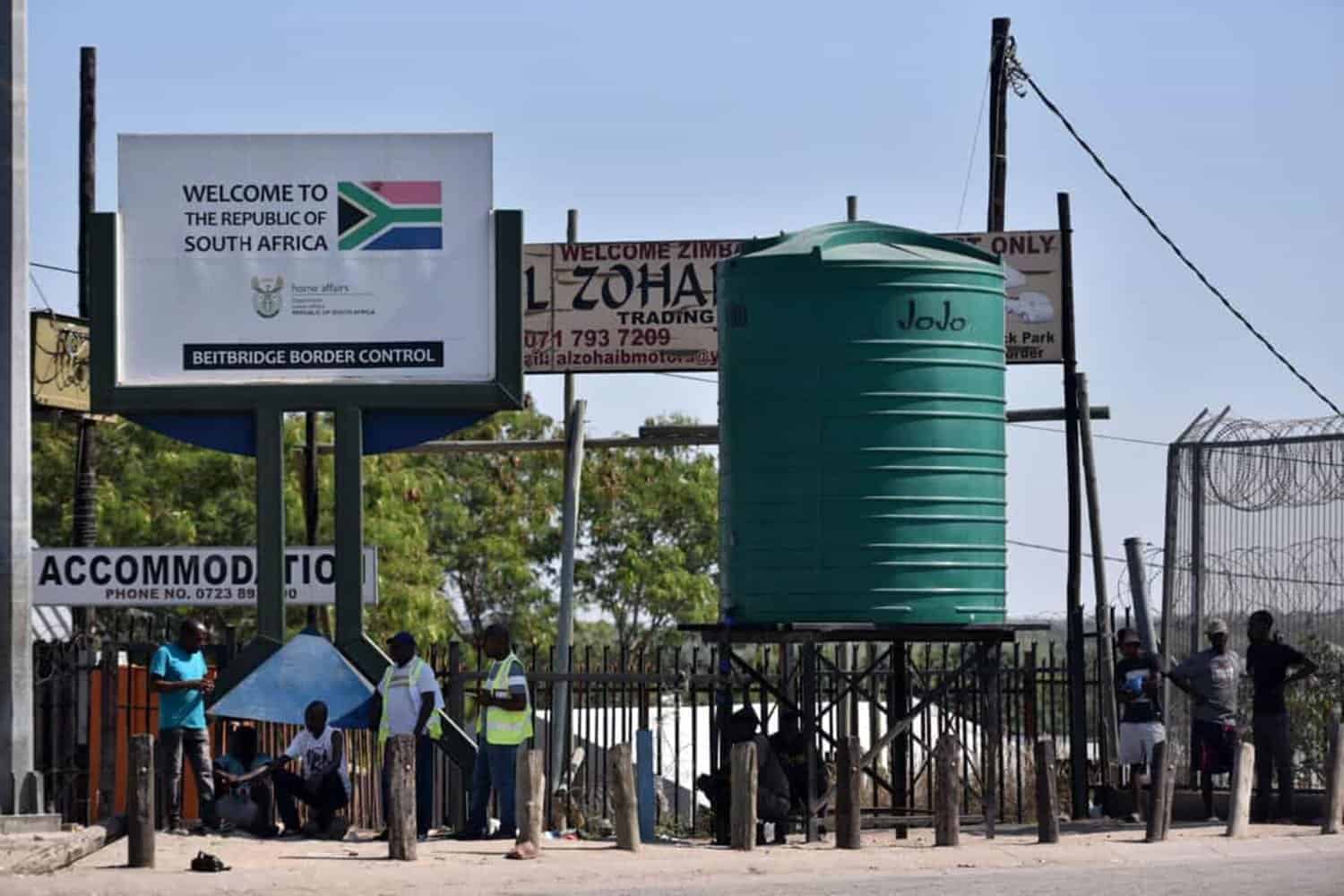
South Africa’s busiest land border post was the scene of a high-profile ministerial walkabout on Monday, as Home Affairs Minister Leon Schreiber, accompanied by Border Management Authority (BMA) commissioner Michael Masiapato, descended on Beitbridge in Limpopo to assess the port’s operational readiness ahead of one of the country’s peak travel periods.
Visit afrikasportnews.co.za for more information.
The visit, which covered everything from the banks of the Limpopo River to the port’s drone surveillance operations centre, formed part of a wider strategy to modernise South Africa’s border security infrastructure and curb the surge in illegal crossings that has long threatened national sovereignty and trade.
Schreiber described the visit as both necessary and revealing.
“There’s no replacement for being on the ground and seeing for yourself how things are going as we now prepare for the Easter festive period,” he said. “We really covered A to Z today.”
During their walkabout, the minister and his team visited the Limpopo River where a specialised amphibious vehicle capable of navigating both water and rough terrain was deployed as a proof of concept.
The vehicle drew significant attention, not least from onlookers on the Zimbabwean side of the river who had reportedly been eyeing potential crossing points before the vehicle’s presence deterred them.
Today I was at Beitbridge to inspect the Border Management Authority’s growing enforcement capabilities ahead of the Easter period. With more drones in the sky, boots on the ground, tech in the field, and partnerships in place, we’re building a stronger BMA to better serve SA! pic.twitter.com/fL7Xia0gie
– Leon Schreiber (@Leon_Schreib) March 23, 2026
Minister confident that BMA can handle Easter travels
Despite the long list of challenges, Schreiber expressed confidence that Beitbridge and the BMA are operationally ready to handle the expected surge in legitimate travellers over the Easter weekend.
Beitbridge remains the country’s busiest land border in terms of traffic, serving as a gateway not only to Zimbabwe but also to several other southern African countries further north.
“The BMA is ready. The operational plans, the advantage is these kinds of operations, you learn from one and you roll it into the next. So we just had the festive season concluding, we’re now going into the Easter period, and taking some of those lessons forward and refining as we proceed,” the minister said.
“I’m confident that as far as it goes for legitimate travellers, people who need to travel over Easter, that the process is in place.”
To ease congestion, Schreiber said operating hours at several ports of entry have been extended.
“I’ve extended the operating hours for a number of ports of entry to make sure that we don’t congest where we don’t have to,” he said.
“I think that’s also going to assist those legitimate travelers, for who we want to facilitate a good process, while at the same time we deal with the security issues and people trying to come into the country illegally.”
ALSO READ: More than 340 000 vehicles unroadworthy ahead of Easter – Creecy
Drones now tracking movement kilometres from the border
The oversight visit included an assessment of the border’s drone surveillance infrastructure, which Schreiber described as transformative in the fight against illegal crossings.
“For the very first time ever, we have the ability to see people moving kilometres away from Beitbridge port of entry or another port of entry trying to cross into South Africa,” he said.
The impact was demonstrated in real time during the visit.
“A few minutes ago, right here behind me, there were people who were intercepted and arrested because we are able to now use the technology to detect where people are moving and then we want to respond and get there,” Schreiber told reporters.
However, while the surveillance capabilities have improved dramatically, the minister was candid about where the system still falls short.
“Our big challenge, the big frustration that I’m feeling as I stand here, is that so much is now in place. The progress we are making is very real, and especially when it comes to our surveillance capabilities, we just don’t have enough resources to respond always to where we need to get and go and make the arrest,” he said.
“It’s a heck of a lot better than it was when we couldn’t even see where people are trying to cross. But we have to continue to invest in this very important institution.”
Schreiber acknowledged the detection-response gap as the central operational challenge.
Border corruption compounds the security crisis
The visit also shone a spotlight on systemic corruption at South Africa’s land borders, an issue that Mafane described as a compounding factor in the broader security crisis.
Over the past year alone, more than 50 BMA members were arrested and convicted for border corruption, undermining the very systems meant to protect the country’s ports of entry.
Mafane noted that the conditions at borders like Beitbridge are a multifaceted problem.
“Across the 53 land ports, there is a systemic problem,” he said.
“The poorest nature of South Africa’s borders is a threat to security and trade.”
The Sars terminal at Beitbridge, which processes customs and trade across the region, also featured in the minister’s walkabout.
Officials briefed Schreiber on the movement of goods, including illicit cigarettes and other contraband that often bypass official checkpoints by crossing the river.
From June this year, all foreign vehicles from SADC countries will be captured in a national registry, allowing law enforcement to monitor how many foreign vehicles are in South Africa at any given time and for how long, a move partly driven by compliance with the Financial Action Task Force (FATF) requirements on cash and goods movement.
Schreiber acknowledged that corruption at the border cannot be addressed through technology alone and that the oversight visit itself was part of a broader accountability drive.
“We can do something about this problem. I think our big challenge is resources,” he said.
Resources, not resolve, remain the limiting factor
Throughout the visit, the recurring theme from the minister was that political will and technological innovation now exist in sufficient measure, but that money remains the binding constraint on how far and how fast South Africa can go in securing its borders.
Schreiber was candid in his comparison with wealthier nations.
“America allocated $75 billion to addressing some of their challenges. We don’t have that money. So what we need to do is focus on areas exactly like this one. We have to prioritise and say, bite by bite, we’re going to zoom in on our most vulnerable sections of the border line,” he said.
He nevertheless struck a note of cautious optimism, pointing to the BMA’s trajectory as evidence that progress is possible even within constrained budgets.
An increased budget allocation for the BMA has been confirmed for the next budget cycle, though the minister made it clear that this alone will not be sufficient.
READ NEXT: Limpopo records drop in Easter crashes as safety measures intensify