Fatih Birol, the executive director of the International Energy Agency (IEA), issued a chilling assessment on Monday from the National Press Club of Australia that the current situation in West Asia is "very severe" and potentially more damaging than the two seismic energy shocks of the 1970s combined.
Visit extonnews.click for more information.
By labelling this a "major, major threat," Birol is signalling that the era of energy stability has fractured, leaving no nation, regardless of its wealth or geography, immune to the fallout.
Who is Fatih Birol and what is his core warning?
As the head of the IEA, Birol is the world’s primary authority on energy security. His warning centres on a "triple threat" that has converged simultaneously. While the 1970s saw distinct disruptions—the 1973 embargo and the 1979 Iranian Revolution—Birol argues that today’s crisis is "two oil crises and one gas crash put all together."
This isn't just a matter of rising prices at the pump. It is a systemic failure of supply chains across two different fuel types, occurring at a moment when the global economy is already fragile. Birol’s core message is a plea for "global efforts," suggesting that individual nations cannot simply spend their way out of this shortage.
Why is the Strait of Hormuz the centre of this crisis?
To understand how this crisis escalated so quickly, one must look at a map of West Asia. The Strait of Hormuz is the world's most vital energy artery, a narrow waterway through which roughly one-fifth of the world’s total oil consumption passes daily.
Following a military exchange involving the US, Israel and Iran, the latter has effectively blocked this passage. This creates a physical "chokepoint" that halts the flow of tankers to Asia and Europe. Furthermore, Birol revealed that the crisis is not just logistical but also physical.
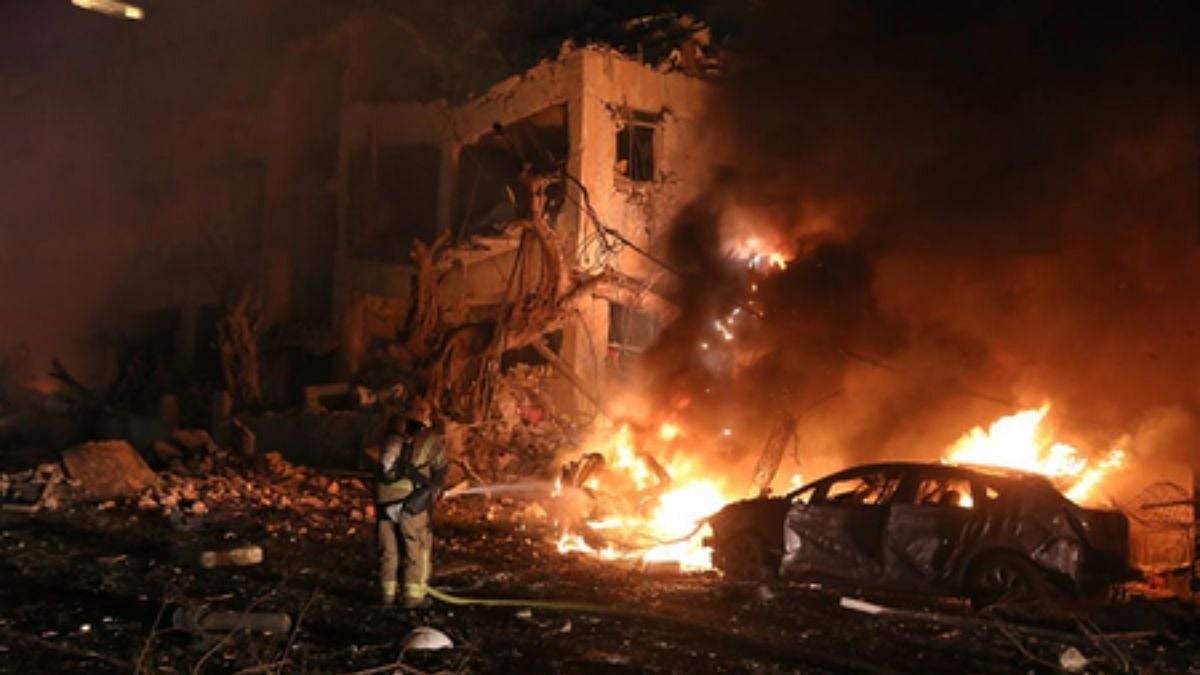
At least 40 critical energy assets across the region have been "severely or very severely damaged," meaning even if diplomacy reopens the sea lanes tomorrow, the infrastructure required to extract and process oil and gas has been physically crippled by conflict.
How does this compare to the 1973 and 1979 energy shocks?
To appreciate the scale of the "very severe" label, we must look at the history Birol is referencing.
In 1973, Arab members of OPEC instituted an oil embargo against nations supporting Israel during the Yom Kippur War. This was a political weapon that saw prices quadruple from $3 to $12 per barrel, forcing Western governments to ration gas and lower speed limits. In 1979, the Iranian Revolution caused a massive supply drop and a wave of "panic buying" that sent prices near $40 per barrel.
Birol’s point is that while those crises were devastating, they were largely limited to oil. Today, the world is also grappling with a "gas crash." Because the modern economy is far more reliant on natural gas for electricity and heating than it was in the 1970s, the simultaneous loss of oil transit and gas infrastructure creates a compounding effect that could trigger a deeper, more stubborn global recession than the "stagflation" of the 20th century.
Where will the economic impact be felt most?
While the blockade is happening in West Asia, the economic tremors are radiating globally. Asia and Europe are the most immediate victims due to their heavy reliance on Middle Eastern imports. However, Birol emphasised that "no country will be immune."
In an interconnected market, when supply vanishes from one region, the global price for the remaining supply sky-rockets. This means a family in Australia or a factory in South America will see their costs rise because they are competing for a smaller pool of global energy.
The IEA is currently in emergency consultations with governments to manage these localised shortages before they lead to total industrial shutdowns.
What is the plan to mitigate the damage?
The IEA has a "break glass in case of emergency" plan -- the Strategic Petroleum Reserve (SPR). Member nations have already agreed to release a record 400 million barrels of oil from these stockpiles—a massive move intended to artificially increase supply and cool down prices.
Birol stated that the IEA is analysing and assessing the markets daily to decide if another release is necessary. However, he was candid in stating that these reserves are finite. They are a temporary bridge, not a permanent solution.
The "biggest solution," according to Birol, is the diplomatic reopening of the Strait of Hormuz and a cessation of attacks on energy infrastructure.
When will the crisis resolve and what is the next step?
There is no clear timeline for a resolution. The situation remains fluid, dependent on the volatility of the conflict in West Asia. For now, the IEA is focussed on "global efforts" to stabilise the market.
The next step for the agency involves high-level discussions with member countries to determine if the 400-million-barrel release was sufficient or if the world must dip deeper into its emergency stores. As Birol warned, the direction the crisis takes next will determine whether the global economy faces a managed slowdown or a historic crash.