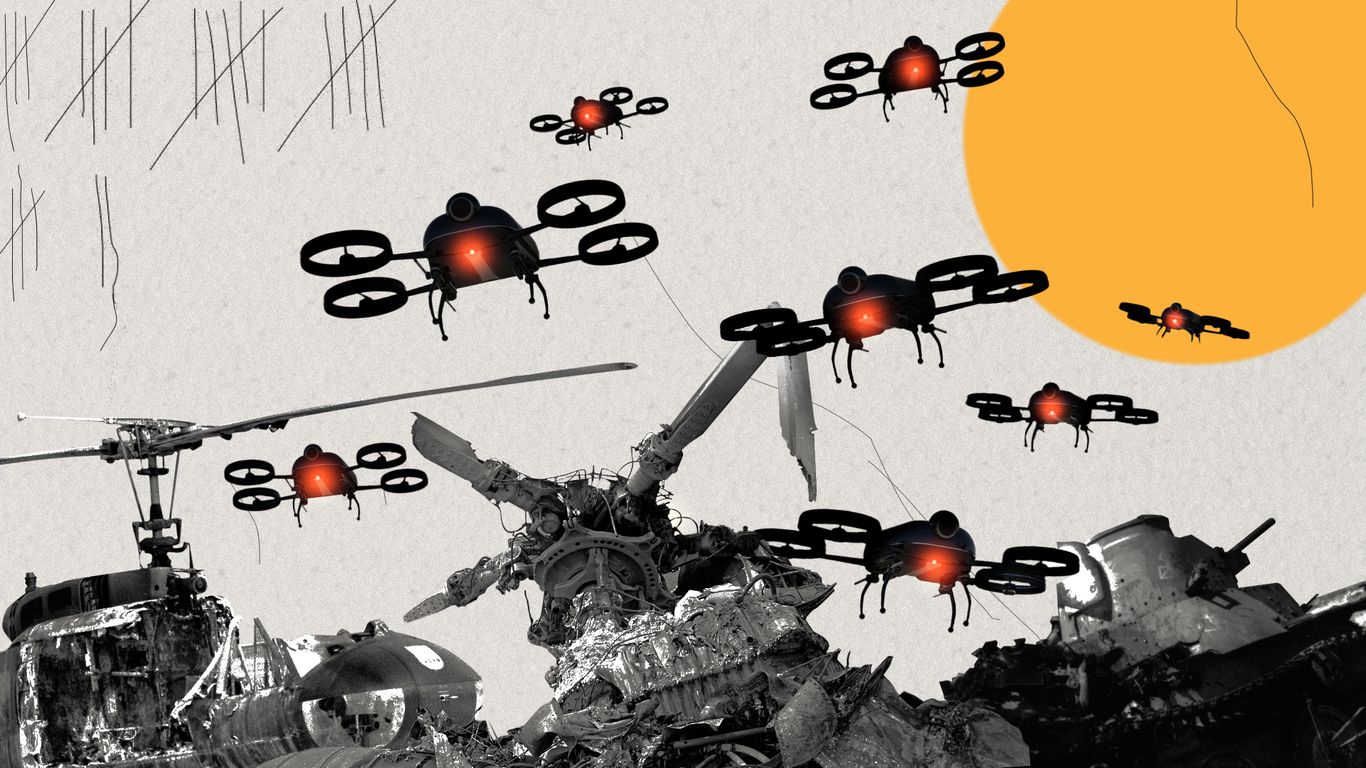
Cheap, mass-produced drones have permanently changed the face of warfare.
- Without them, Russia's overwhelming manpower and firepower advantage would grind Ukraine into dust.
- Without them, the Houthis are a ragtag militia in Yemen — not a force that brought global shipping to its knees.
- Without them, a sanctioned, isolated Iran couldn't inflict nearly as much damage to the most powerful military in world history.
Why it matters: Size no longer guarantees victory. Any nation, any proxy, any rebel group with access to cash and commercial components can now bleed a superpower slowly, expensively and without a clean answer.
Visit catcrossgame.com for more information.
Driving the news: Iran's Shahed drone — said to cost between $20,000 and $50,000 — has been the regime's great equalizer, forcing the U.S. and its allies to respond in some cases with interceptor missiles costing millions of dollars each.
- In the first week of the war alone, Tehran fired nearly 2,000 drones at U.S. bases and allied targets across 12 countries — slamming into airports, five-star hotels and oil infrastructure across the Gulf.
- Six U.S. service members were killed March 1 when an Iranian drone evaded air defenses and struck an operations center in Kuwait. "We basically had no drone defeat capability," one source told CBS News.
Between the lines: The Shahed was already battle-tested before the Iran war broke out.
- Russia imported thousands of Shaheds from Iran and built an entire factory to mass-produce its own version — the Geran — turning them into a nightly terror for Ukrainian cities.
- The Iran-backed Houthis in Yemen deployed their own copy, the Waid, and launched attacks that paralyzed Red Sea shipping for two years.
- Even the U.S. reverse-engineered its own version — LUCAS — and is now firing it back at Iran.
"We captured it, pulled the guts out, sent it back to America, put a little 'made in America' on it, brought it back here, and we're shooting it at the Iranians," CENTCOM commander Adm. Brad Cooper told reporters this month.
- These drones, Cooper stressed, are "indispensable."
Zoom out: Ukraine, fighting for its life against Russian Shaheds for the past four years, is now the world's foremost authority on stopping them.
- As Axios first reported, Ukrainian officials offered Washington their anti-drone technology eight months before the Iran war started. The Trump administration turned them down.
- After the war started, the U.S. reversed course. Ukrainian specialists are now deployed to the Gulf to train U.S. and allied forces.
The U.S. has also rushed 10,000 Merops interceptor drones to the Middle East, according to Army Secretary Dan Driscoll.
- The AI-enabled systems, stress-tested in Ukraine, cost roughly $14,000 each — cheaper than the Shahed it's designed to kill.
- The Pentagon says Iranian drone attacks are now down 95% from their peak.
The bottom line: The cheap drone is just the beginning, Oleg Rogynskyy, CEO of defense-tech company UForce, tells Axios.
- Today's battlefield already features maritime drones locking down shipping lanes, aerial drones hunting both ground targets and aircraft, and ground robots storming trenches — all coordinated through AI.
- "We're getting into phase zero of Terminator, where autonomous systems are starting to win against humans en masse," Rogynskyy said.